Leave A Message
If you are interested in our products and want to know more details, please leave a message here, we will reply you as soon as we can.

WPC Sound Barriers and Public Seating Drive Urban Demand
Cities are quietly changing what they buy for public space. Along new rail lines, highway corridors and renovated parks, the familiar gray concrete and painted timber are being replaced by wood-plastic composite profiles — sound barrier panels that no longer need repainting, park benches that survive a decade of weather and vandalism, boardwalk edging, planter boxes and waste enclosures made from the same material family. Industry research now projects that B2G applications — municipal sound barriers, public seating and street furniture — will account for roughly 15% of total WPC demand in 2026, a share that barely registered five years ago. For exporters and project contractors, WPC is no longer just a backyard decking story; it is becoming urban infrastructure.
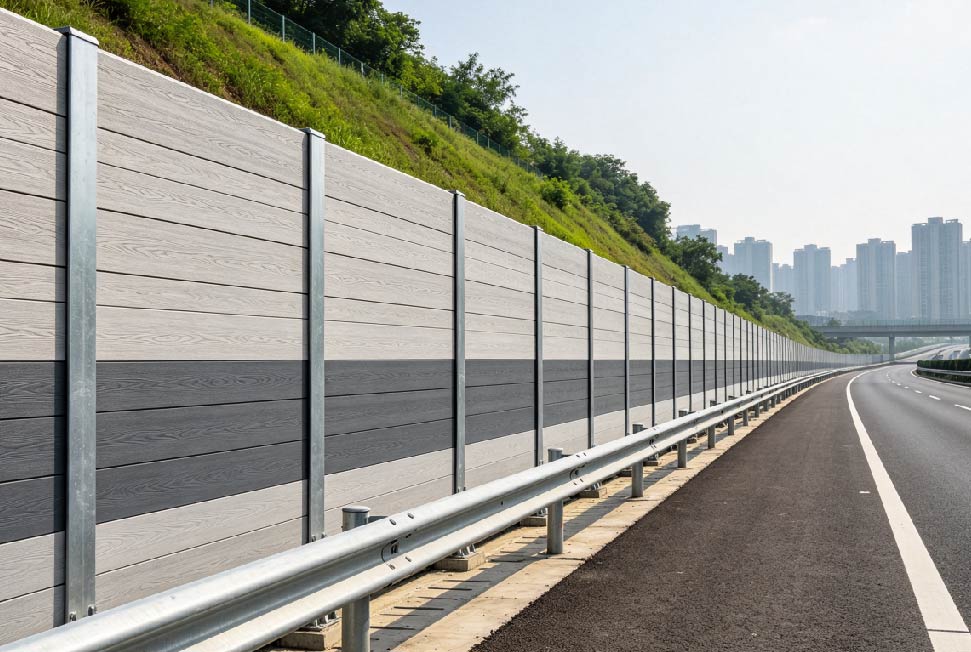
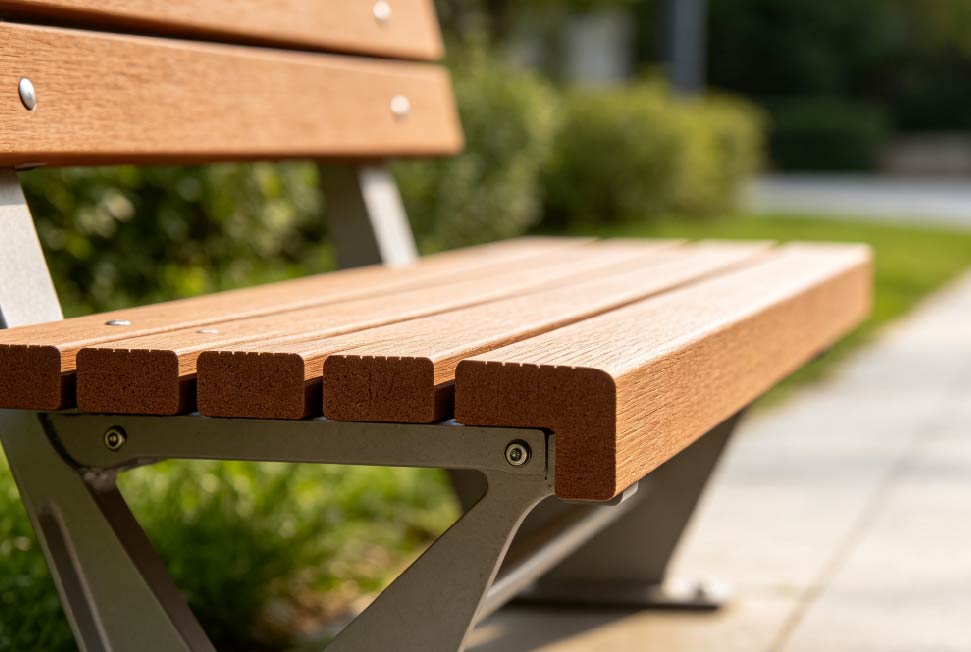
The logic behind this shift is lifecycle cost, not sticker price. A municipal bench or barrier is specified for 15–25 years of service with minimal maintenance budgets, which is exactly where wood-plastic composites outperform both timber and bare concrete. Treated timber seats need sanding and recoating every few seasons; painted steel rusts at the bolts; concrete cracks and grows moss in damp climates. Well-formulated WPC profiles — particularly co-extruded boards with a protective polymer cap — resist moisture, insects and mold without annual repainting, and their color stability is documented through UV-aging tests rather than marketing promises. Just as important for public projects: splinter-free surfaces and rounded profiles reduce injury risk in playgrounds and schools, while the material's density gives benches and barriers the weight and solidity that designers want.
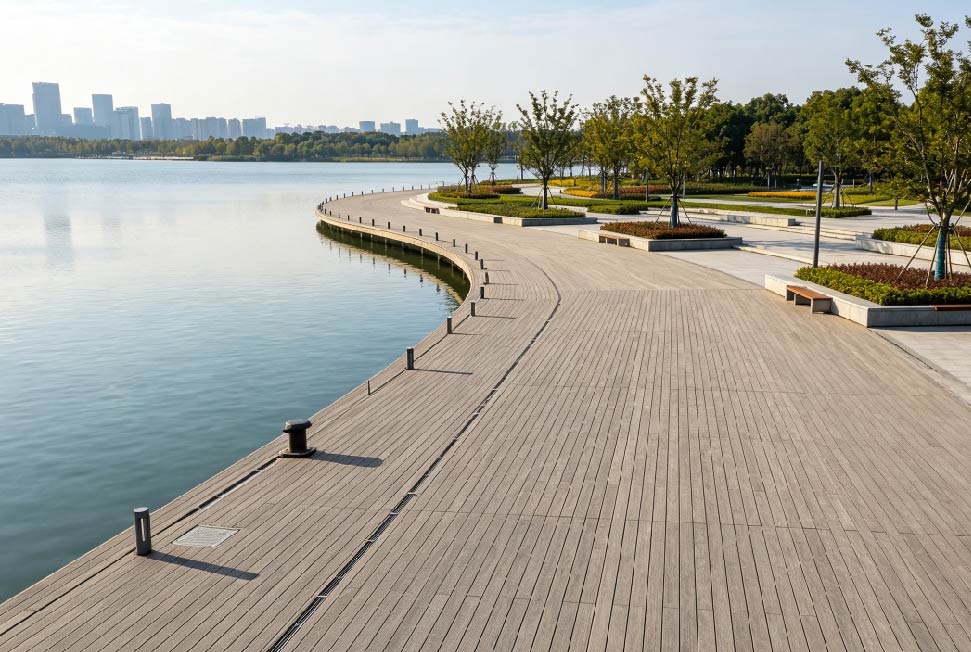
The numbers behind the trend are substantial. Global market studies put the wood-plastic composite industry at around US$18.5 billion in 2026, growing at roughly 4–5% a year, with China producing more than 3.5 million tonnes — over 38% of world supply. Within that total, municipal demand is the quiet growth engine: urban renewal programs in Europe, transit corridor construction across Asia, and park upgrades in North America and the Middle East are all pulling the same product categories. Sound barriers are the largest single opportunity. Highway and rail projects consume WPC panels by the thousands of square meters, and composite barrier boards combine noise performance with weather resistance in a way that avoids the corrosion and repainting cycles of steel systems. Public seating, planters, fencing around utility sites, and WPC decking for waterfront boardwalks round out the basket — all one-time installations with decades-long service expectations.
Municipal buyers, however, purchase differently from homeowners, and suppliers who treat governments like retail customers are losing tenders. Public procurement increasingly writes sustainability and safety directly into specifications: recycled-content declarations, fire classification (Euroclass or ASTM E84 in tender documents), slip ratings for walkway surfaces, and full documentation chains — CE marking with EN 15534 reports, ISO 9001, and third-party test data from bodies such as SGS or Intertek. In several markets, green procurement rules favor products with verified recycled plastic content, which plays directly to WPC's core formulation of reclaimed wood fiber and post-consumer polymer. The message to factories is simple: in B2G projects, the document pack qualifies you before price is ever discussed.
For suppliers, the B2G wave rewards companies that can deliver more than boards. Municipal projects need coordinated systems — barrier profiles, bench slats, fence posts, substructures and stainless fasteners shipped together, with span tables and installation guidance that municipal engineers can file with their permits. As city budgets worldwide keep prioritizing durable, low-maintenance public space, the 15% share of government-driven demand looks set to keep climbing — and the factories positioned for documentation, consistency and complete systems will take most of that growth.
About Senlai
Senlai supplies co-extruded WPC decking, WPC wall panels and WPC fencing for residential, commercial and public-sector projects, with PE co-extrusion lines, regional weathering formulations and complete accessory systems — clips, starter clips, stainless steel screws, spacers and end caps shipped as one package. Contact the Senlai team for samples and specification documents before your next public-space tender.


 New Products