
Leave A Message
If you are interested in our products and want to know more details, please leave a message here, we will reply you as soon as we can.

We often get questions from clients: "My backyard ground is a bit bumpy. Can I just lay WPC decking directly on joists over it?" Our answer is always the same: You must level the ground first. While WPC decking is durable and weather-resistant, it is not a "magic leveling tool." Forcing an installation over an uneven base will lead to three fatal hidden dangers.
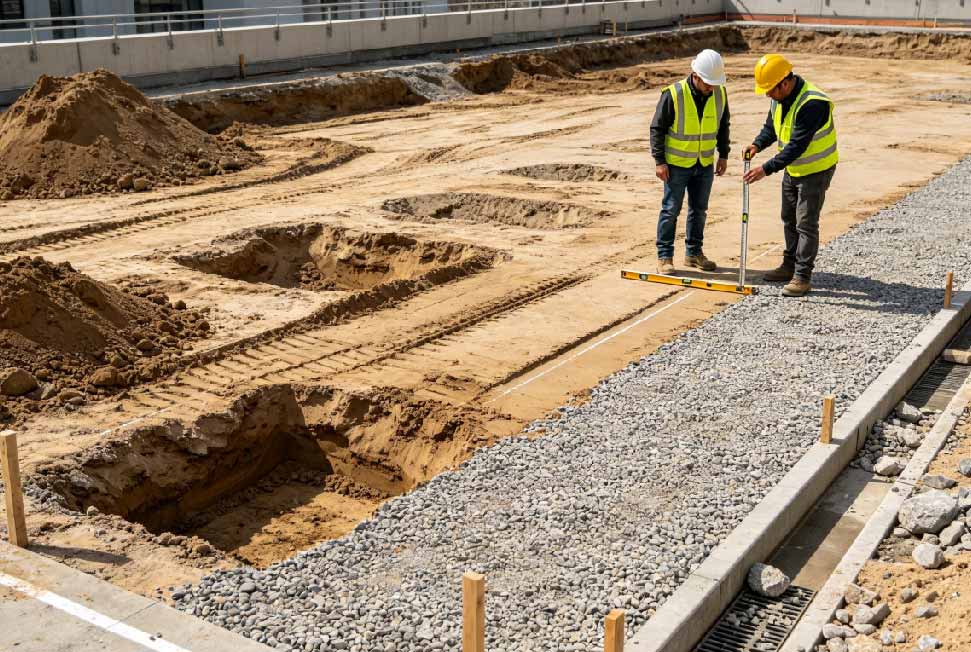
Danger 1: Hollow Feel, Squeaking, and Broken Joists
WPC decking relies entirely on the joists underneath for structural support. If the ground has deep dips or high spots, the joists will be suspended or unevenly stressed. When you step on a suspended board, it creates a severe hollow feel and squeaking noise. Over time, the suspended joists will snap due to repeated fatigue, causing the entire deck to collapse.
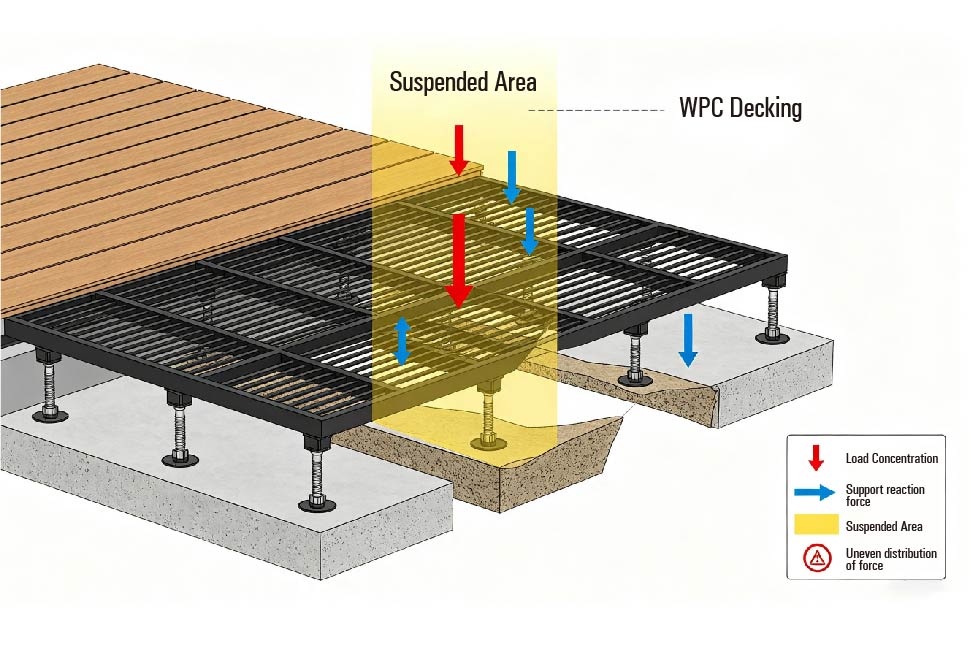
Danger 2: Water Pooling, Mold, and Mosquitoes
Uneven ground easily forms low-lying water pools. If rainwater cannot drain away and sits under the deck for a long time, it accelerates the aging of the joists and breeds mold, algae, and mosquitoes. The correct practice is to ensure a flat, solid base with a 1%-2% drainage slope so water flows away quickly.
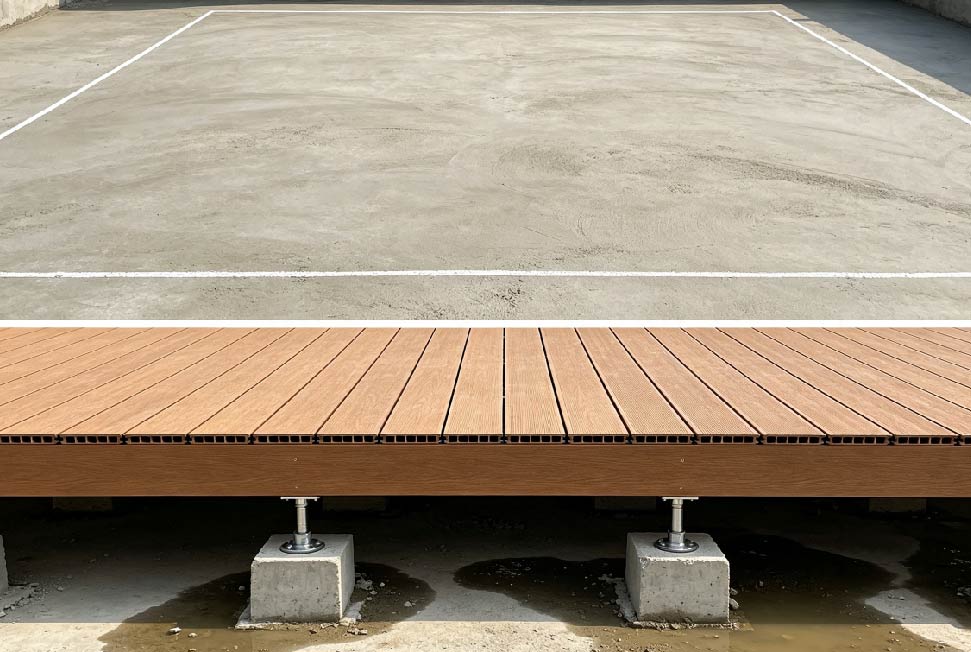
Danger 3: Blocked Thermal Expansion and Deck Buckling
If the ground is uneven, installers might over-tighten clips or leave uneven gaps to force the boards level. This causes the thermal expansion and contraction stress to be unevenly distributed. During extreme heat or cold, the stress will concentrate in weak spots, causing the boards to buckle and warp, ruining the entire terrace.
Conclusion: The very first step of installing WPC decking is preparing the ground. Whether it's hardened concrete or compacted gravel, the base must be flat, solid, and well-drained. A good foundation ensures your deck lasts for decades; a bad one will ruin even the most expensive boards.